
I Hit My Goal Weight… Do I Have to Stay on GLP-1 Forever?
The rise of GLP-1 agonists (semaglutide, tirzepatide, retatrutide) has empowered millions—including former athletes and active adults—to achieve transformative improvements in weight, metabolic health, and body composition. But once the goal is reached, a critical question emerges:
Do you need to stay on GLP-1 therapy indefinitely to maintain your results?
Medical consensus increasingly recognizes obesity as a chronic, relapsing metabolic disease requiring long-term management for most individuals.¹ However, that management does not always require full-dose GLP-1 therapy. For some, especially those who optimize their hormonal environment, maintenance becomes far easier, and lower-dose or intermittent use may be sufficient.²

🔬 The GLP-1 Hierarchy: What We Know About Microdosing
Of all GLP-1 agonists, semaglutide is the most thoroughly studied. Early data and real-world experience on microdosing (≈50–250 mcg/week) likewise center on semaglutide because of its longer clinical availability and well-characterized pharmacokinetics.³
Newer agents like tirzepatide and retatrutide produce significantly greater weight-loss at therapeutic doses⁴⁻⁵, but they are very new—meaning:
- Limited long-term data on microdosing
- No multiyear follow-up studies
- Only early hypotheses about maintenance-phase use
In short:
Microdosing semaglutide = observable data.
Microdosing tirzepatide/retatrutide = emerging theory.
🎯 Hormones, Habits, and the Metabolic Set Point
Weight regain is often framed as a discipline problem—but for aging adults, former athletes, and people experiencing hormonal decline, it’s actually a biology problem.
The key driver is metabolic set point, the weight range the body defends through appetite, energy expenditure, and hormonal signaling.⁶
Body composition is a product of your hormonal environment plus lifestyle inputs.
GLP-1 temporarily lowers the defended set point.
Returning to old habits and an older hormonal profile pulls the body back toward its previous composition.⁷
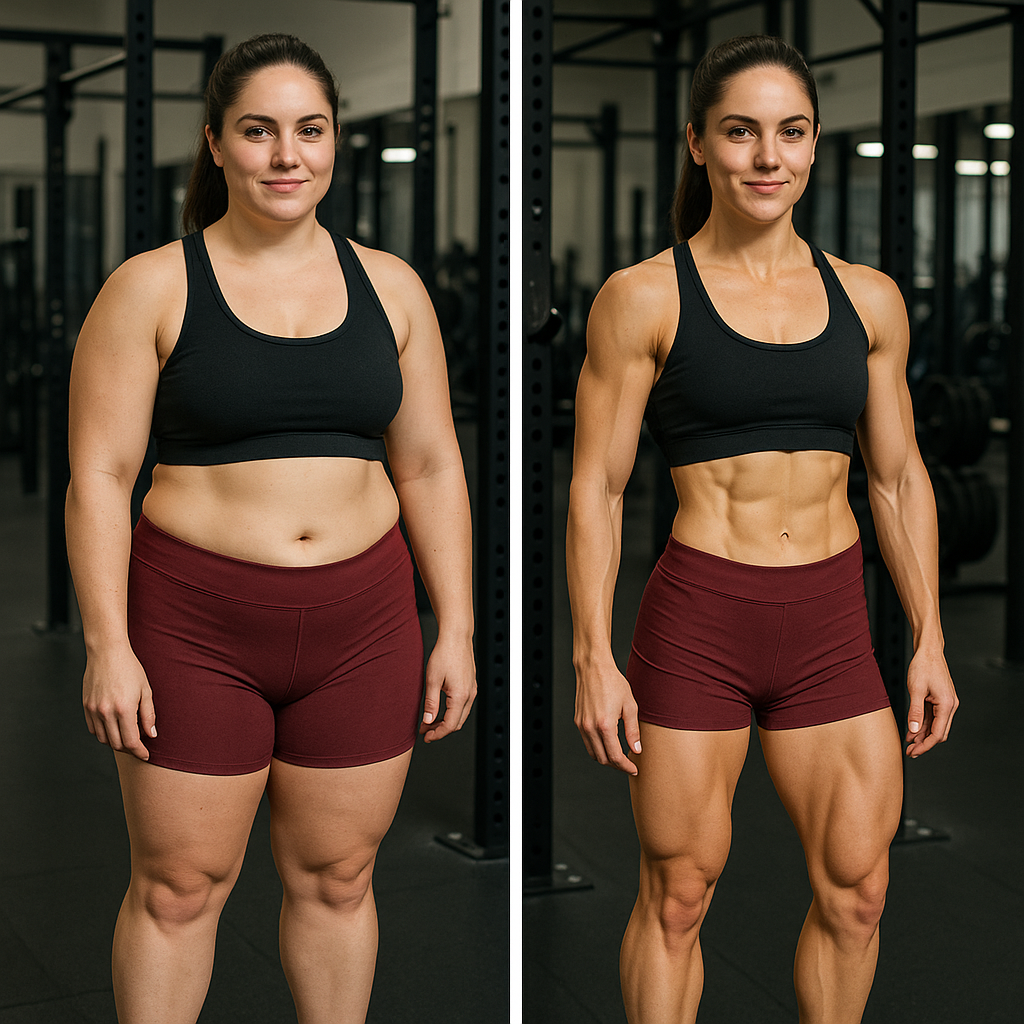
This is why weight regain commonly occurs after GLP-1 discontinuation: the internal biology that produced the old body composition is still in place.
🔁 Can Hormone Optimization Reduce or Eliminate GLP-1 Dependence?
For many adults in their 40s–60s, hormonal decline—not character flaws—drives slow metabolism, increased visceral fat, reduced muscle mass, and lower energy.
TRT/HRT can recreate a younger metabolic profile by improving:
- Resting metabolic rate
- Lean mass
- Fat oxidation
- Insulin sensitivity
- Recovery and sleep
Men frequently experience improved body composition and metabolic stability on TRT, improving their ability to maintain weight independent of GLP-1 therapy.⁸
Women often struggle with visceral fat accumulation and metabolic slowing after menopause. HRT has been shown to improve insulin sensitivity, body composition, sleep, and overall metabolic health—making maintenance substantially easier.⁹
⚕️ Synergistic Strategies: When GLP-1 Becomes One Piece of a Larger Plan
For active adults and aging athletes, the most successful long-term strategy is pairing micro-GLP-1 support with therapies that directly address age-related physiological decline.
1. TRT for Men & HRT for Women
Men (TRT):
TRT improves muscle mass, reduces visceral fat, boosts RMR, enhances motivation, and improves insulin sensitivity.⁸ Combined with GLP-1, the synergy supports both fat loss and long-term metabolic stability.
Women (HRT):
Post-menopausal HRT improves sleep, fat distribution, mood, metabolic health, and visceral fat accumulation.⁹ This creates a physiological environment conducive to maintaining weight without continuous GLP-1 reliance.
2. GH-Boosting Peptides (Ipamorelin, CJC-1295, Sermorelin)
Growth Hormone plays a uniquely powerful role in the body’s ability to burn fat and maintain lean tissue.
Direct metabolic effects:
GH is a potent stimulator of lipolysis, particularly in visceral fat deposits.¹⁰⁻¹¹
Indirect effects:
GH and IGF-1 improve:
- Deep sleep
- Recovery
- Connective tissue repair
- Training response
- Protein synthesis¹²
When paired with GLP-1 agonists:
GLP-1 controls appetite and glucose.
GH peptides increase fat breakdown and recovery capacity.
This combination creates a metabolic environment highly favorable for active adults aiming for sustainable long-term maintenance.

✔️ So… Do You Have to Stay on GLP-1 Forever?
Not always. But you do need a plan.
Most people fall into one of three categories:
1. Long-Term Low-Dose Use (Most Individuals)
Research shows many adults maintain weight best with:
- Microdosing
- Low-dose maintenance
- Intermittent dosing
- As-needed use²
2. Transitioning Off With Support
Those who improve their hormonal environment—via TRT, HRT, GH-boosting peptides, sleep optimization, strength training, and nutrition—frequently reduce or discontinue GLP-1 while maintaining results.
3. Complete Discontinuation (Least Common)
A minority with excellent metabolic health, optimal hormone levels, strong training habits, and high insulin sensitivity may come off entirely.
The real question isn’t “Do I need GLP-1 forever?”
It’s “Can my physiology maintain my new weight without it?”
For many, the answer becomes yes—with the right support system.
📚 Reference List
- Rubino F, et al. Obesity as a disease: The Obesity Society 2018 position statement. Obesity. 2018;26(6):787-788.
- Kushner RF, et al. Long-term weight maintenance and the role of pharmacotherapy. J Clin Endocrinol Metab. 2020;105(12):e5040-e5052.
- Wilding JPH, et al. Once-weekly semaglutide in adults with overweight or obesity. N Engl J Med. 2021;384:989-1002.
- Jastreboff AM, et al. Tirzepatide once weekly for the treatment of obesity. N Engl J Med. 2022;387:205-216.
- Rosenstock J, et al. Retatrutide: A triple-agonist showing sustained weight reduction. Lancet. 2023;401(10373):223-233.
- Hall KD, et al. Metabolic adaptation to weight loss and the defended weight set point. Am J Clin Nutr. 2016;104(4):989-1006.
- Fothergill E, et al. Persistent metabolic adaptation 6 years after “The Biggest Loser.” Obesity. 2016;24(8):1612-1619.
- Handelsman DJ. Testosterone and male aging. Annu Rev Med. 2013;64:131-142.
- Stuenkel CA, et al. HRT in postmenopausal women: metabolic and body composition effects. J Clin Endocrinol Metab. 2015;100(4):1260-1271.
- Veldhuis JD, et al. Physiology of GH pulsatility and lipolysis. J Clin Invest. 1991;88(3):827-836.
- Ho KY, et al. Fasting enhances growth hormone secretion and lipolysis in humans. J Clin Invest. 1988;81(4):968-975.
- Perry RJ, et al. Glucagon and energy expenditure regulation. Diabetes. 2017;66(10):2410-2418.