
The Veteran’s Edge: Why Mature Athletes Should Add Thymosin-Alpha-1 to Their Recovery Arsenal
Executive Summary
For athletes over 35, performance is increasingly limited not by motivation or training knowledge, but by biology. Immune coordination declines with age, inflammation becomes more persistent, and recovery from systemic stress slows—making consistency harder to maintain. These changes are driven in part by thymic involution and declining cellular energy availability, two processes that quietly but profoundly affect athletic longevity.123
Thymosin-Alpha-1 (Tα1) is a naturally occurring thymic peptide studied for its role in immune modulation, inflammatory balance, and immune resilience in aging and stressed systems. Rather than acting as a stimulant or performance enhancer, Tα1 supports upstream immune processes that influence recovery speed, illness susceptibility, and training continuity—factors that increasingly define success for mature athletes.134

When paired with NAD⁺, a central coenzyme required for mitochondrial energy production and DNA repair that also declines with age, the result is a systems-level recovery strategy. NAD⁺ supplies the energetic and repair capacity required for immune and tissue recovery, while Tα1 helps coordinate immune signaling and resolution of inflammation. Together, they dramatically shorten the recovery phase by addressing both immune regulation and cellular energy availability.56789
At the time of this writing, neither Thymosin-Alpha-1 nor NAD⁺ appear on the current World Anti-Doping Agency (WADA) Prohibited List.10 Their relevance to mature athletes lies not in artificial performance enhancement, but in supporting recovery biology that naturally degrades with age.
The Declining Thymus: An Aging Athlete’s Hidden Bottleneck
The thymus gland, located behind the sternum, serves as a training ground for T-cells—key regulators of immune surveillance, inflammation control, and recovery signaling. Thymosin-Alpha-1 is a naturally occurring peptide produced by the thymus and plays a central role in immune modulation rather than immune stimulation.1
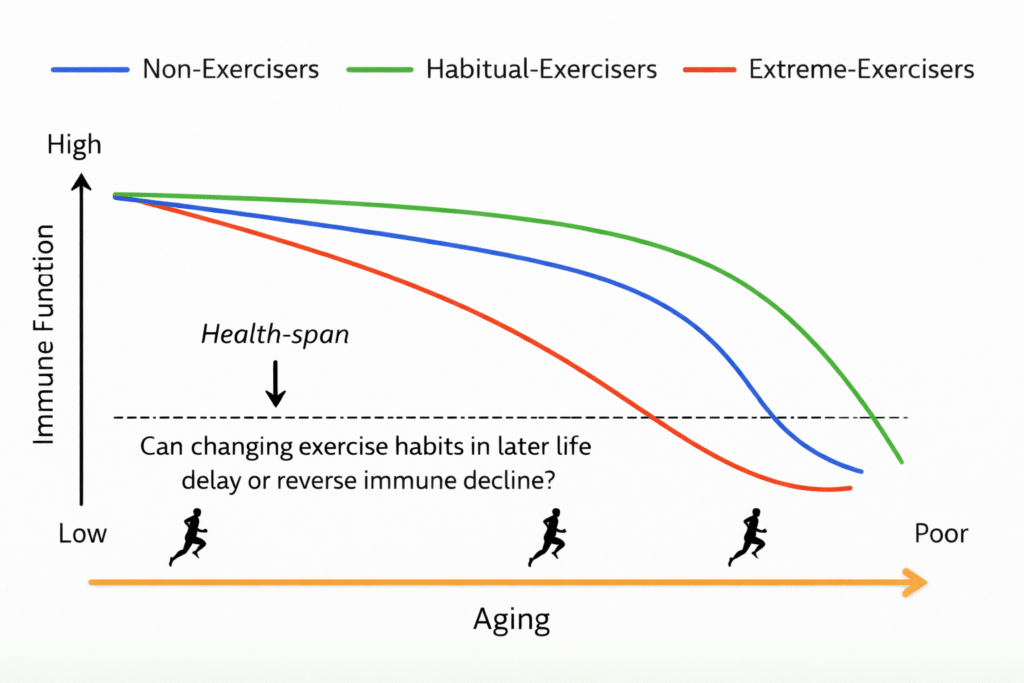
After puberty, the thymus undergoes involution, a gradual shrinkage that significantly reduces output of thymic peptides by midlife.2 This decline contributes to immunosenescence, the age-related loss of immune coordination that often shows up in athletes as slower recovery, increased susceptibility to illness, lingering inflammation, and reduced tolerance for training errors.34
For mature athletes, immune decline increasingly becomes a rate-limiting factor for progress rather than strength, motivation, or technical skill.
Why Thymosin-Alpha-1 Matters More After 35
Importantly, Thymosin-Alpha-1 does not directly increase muscle mass, strength, aerobic capacity, or hormone levels. Its relevance to athletic performance lies upstream: supporting immune coordination, inflammatory resolution, and recovery consistency rather than forcing adaptation.
Immune Resilience Under Training Stress
Intense training creates a temporary “open window” of immune vulnerability, during which susceptibility to infection increases.4 This phenomenon becomes more pronounced with age. Tα1 has been studied for its role in supporting T-cell maturation and natural killer (NK) cell activity, helping restore immune readiness more efficiently following hard training bouts.13
Reducing Chronic Low-Grade Inflammation (“Inflammaging”)
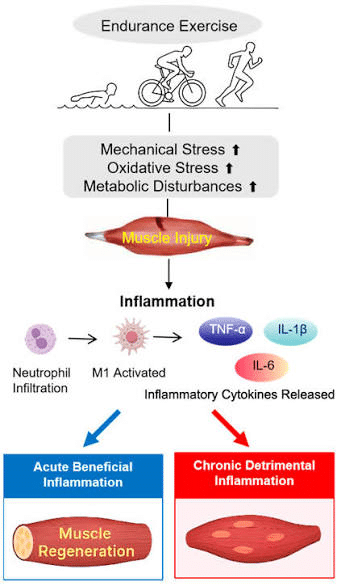
Years of cumulative training stress combined with aging physiology often lead to persistent, low-grade inflammation—experienced as chronic soreness, stiffness, slower healing, and fatigue. Tα1 functions as an immune modulator, helping dampen excessive inflammatory signaling while preserving the acute inflammatory responses necessary for tissue repair.23
Recovery From Micro-Trauma: Improving the Transition From Breakdown to Repair
Every intense workout creates micro-damage at the cellular level. Effective recovery depends on timely immune clearance of debris followed by a clean handoff to anabolic and remodeling processes. By supporting immune signaling and cleanup, Tα1 may help the body exit the inflammatory phase more efficiently—allowing rebuilding processes to proceed without prolonged immune interference.
Protection Against Overtraining Syndrome
Overtraining syndrome reflects systemic dysregulation involving immune, endocrine, and nervous system stress rather than simple fatigue. Mature athletes have less margin for error and recover more slowly from cumulative overload. Tα1’s role in immune homeostasis makes it relevant during high-volume or high-intensity phases where systemic stress becomes the primary limiter.
Training Continuity: The Real Performance Advantage After 35
For younger athletes, missing a week of training is often inconsequential. For athletes over 35, interruptions caused by illness, lingering inflammation, or “almost sick” states can derail progress for months. As training age increases, consistency becomes the true performance metric.
Interest in Tα1 among mature athletes is therefore less about training harder and more about staying trainable—maintaining momentum across seasons rather than cycling between progress and setbacks.
Endurance Training and Age-Related Immune Suppression
Long endurance sessions and high-volume training blocks are known to transiently suppress immune function, particularly in athletes with extensive training history.4 As this effect becomes more pronounced with age, immune regulation shifts from a background concern to a strategic priority.
Typical Use Considerations for Otherwise Healthy, Mature Athletes
In otherwise healthy athletes over 35, Thymosin-Alpha-1 is most often discussed as a periodic immune-support strategy rather than a continuous daily intervention. Use is commonly structured in short, defined cycles aligned with periods of elevated physiological stress—such as high-volume training blocks, travel, caloric restriction, or seasonal immune challenges—reflecting its role in supporting immune coordination and inflammatory resolution rather than chronic immune stimulation.
In adult research and clinical contexts, Tα1 is frequently referenced in dosing ranges of approximately 0.8–1.6 mg per administration, given two to three times per week, with total cycle lengths often spanning 4–8 weeks followed by a break. Timing is generally independent of training sessions, as Tα1 is not acutely performance-enhancing; emphasis is placed on consistency and tolerance rather than precise workout timing. This discussion applies to otherwise healthy adults and should be approached conservatively and in coordination with a qualified medical professional.
The Ultimate Duo: Thymosin-Alpha-1 and NAD⁺
While Tα1 supports immune coordination and inflammatory balance, NAD⁺ plays a central role in cellular energy production, mitochondrial health, and DNA repair. Like thymic output, NAD⁺ availability declines with age.56
The Energy–Immune Loop
An active immune system is metabolically expensive. Tα1 helps orchestrate immune responses, while NAD⁺ supplies the mitochondrial fuel required for immune cells to function effectively without draining recovery capacity.
Mitochondrial Protection Through Inflammation Control
Chronic inflammation damages mitochondria, reducing energy availability and perpetuating fatigue. Tα1 helps lower inflammatory burden, while NAD⁺ activates sirtuin pathways—particularly SIRT3—that protect mitochondrial integrity and promote mitophagy.89
Accelerated DNA and Tissue Repair
Intense training creates micro-damage at both the tissue and genetic level. NAD⁺ activates PARP enzymes involved in DNA repair, while Tα1 supports immune-mediated cleanup and tissue remodeling. Together, they dramatically shorten the recovery phase, allowing muscles to rebuild stronger and faster.7
Sleep, Circadian Rhythm, and Systemic Recovery
NAD⁺ plays a key role in circadian regulation via SIRT1, while immune balance and inflammation control influence sleep depth and quality. Supporting both systems becomes increasingly important for recovery as athletes age.8
Important Safety Considerations
Thymosin-Alpha-1 is an immune-modulating peptide and should not be used in individuals with known or suspected active malignancy, or when there is unresolved concern for cancer. Because immune signaling plays a role in tumor surveillance and progression, any intervention that alters immune activity should be approached cautiously and only under direct medical supervision in such contexts.
This article addresses otherwise healthy adults and is not intended to replace individualized medical guidance.
What This Is Not
Thymosin-Alpha-1 is not a stimulant, anabolic agent, or substitute for intelligent training design, sleep, nutrition, or load management. Its relevance lies in supporting biological systems that increasingly limit recovery with age—not in overriding them.
Conclusion: Investing in Athletic Longevity
For mature athletes, training smarter means accounting for immune aging and systemic recovery, not just muscles and joints. Thymosin-Alpha-1—particularly when paired with NAD⁺—offers a biologically grounded strategy for supporting immune resilience, recovery efficiency, and training continuity.
The goal is not short-term performance spikes, but sustained athletic capacity, fewer interruptions, and a longer competitive lifespan.
References
- Goldstein AL, Goldstein AL. Thymosin alpha 1: a peptide regulator of immunity. Ann N Y Acad Sci. 1987;496:177–185.
- Palmer DB. The effect of age on thymic function. Front Immunol. 2013;4:316.
- Romani L, Bistoni F, Gaziano R, et al. Thymosin alpha 1 activates dendritic cells for Th1 resistance. Blood. 2004;103(11):4232–4239.
- Walsh NP, Gleeson M, Shephard RJ, et al. Immune function and exercise. Exerc Immunol Rev. 2011;17:6–63.
- Verdin E. NAD⁺ in aging, metabolism, and neurodegeneration. Science. 2015;350(6265):1208–1213.
- Gomes AP, Price NL, Ling AJ, et al. Declining NAD⁺ induces a pseudohypoxic state during aging. Cell. 2013;155(7):1624–1638.
- Houtkooper RH, Cantó C, Wanders RJ, Auwerx J. The secret life of NAD⁺. Endocr Rev. 2010;31(2):194–223.
- Cantó C, Auwerx J. Targeting sirtuin 1 to improve metabolism. Pharmacol Rev. 2012;64(1):166–187.
- Lombard DB, Zwaans BM. SIRT3 and mitochondrial health. Gerontology. 2014;60(1):56–64.
- World Anti-Doping Agency. The World Anti-Doping Code: Prohibited List. Current edition.